Vittoria Florio
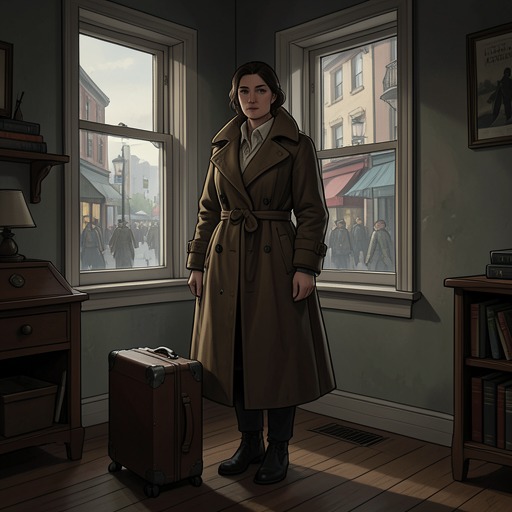
The Florios of SicilyVittoria Florio, the orphaned niece of Ignazio Florio, grows from a child seeking shelter during an earthquake into a young woman who acts decisively when the adults around her fail to see or respond to danger. Her story is shaped by repeated losses and by the work of caring for those who remain: when Giuseppina collapses, Vittoria runs barefoot through rain to find a midwife; when Paolo is dying, she makes him face how ill his wife has been; and after Paolo’s death, she draws the speechless Vincenzo close and names the loss they share. Her significance lies in this movement from dependence to unsparing, compassionate responsibility.
Identity and Early Vulnerability
Vittoria is the daughter of Ignazio’s brother Francesco. Francesco and his wife died a few years before the earthquake scene, leaving their daughter in the care of Paolo and Giuseppina, the relatives able to offer her a family and a roof. Her orphanhood is not merely background: the narrative returns to her fear of losing the last people who can protect her, and makes that insecurity a pressure behind her later actions.
During the earthquake, Vittoria is nine. As her bed sways between the wall and the middle of the room, a metal casket, comb, and razor fall from a bench. Ignazio does not flee when the house shakes; he first drags her beneath the bed, tells her to stay there, and warns her not to move. She is too frightened to speak and can only nod. The scene establishes her dependence on others for safety, while showing the care that binds her to Ignazio.
When she emerges, Vittoria will not release Ignazio’s shirt. He pulls her hand away, and she turns to Giuseppina, clinging to her as she had clung to him. Her attachment is expressed through gesture rather than explanation: she moves between the adults who constitute her shelter, like a castaway reaching for whoever can keep her afloat. The image makes visible how precarious her sense of family remains.
Family, Memory, and Displacement
The earthquake’s damage persists in the landscape Ignazio later remembers. Along the road stand shacks of stone and timber where houses once stood; the 1783 earthquake destroyed them, and survivors rebuilt with salvaged material. Some other people made larger, wealthier houses from the ruins, including Paolo Barbaro, Mattia’s husband. Against this uneven recovery, Vittoria belongs to a family whose security is emotional and conditional, not simply a matter of shelter or property.
Ignazio finds Mattia sitting barefoot on a bench, her daughter Anna clinging to her nightgown and Raffaele asleep in her arms. Seeing his mother in his sister’s dark coloring, he embraces Mattia without speaking, and his anxiety eases. The scene places Vittoria within a wider network of siblings and cousins, but also traces the relief family offers through embodied recognition: an embrace, a face held between hands, a kiss on the eyelids. Vittoria’s place in that network is defined by ties formed through care after loss.
Growing into Responsibility
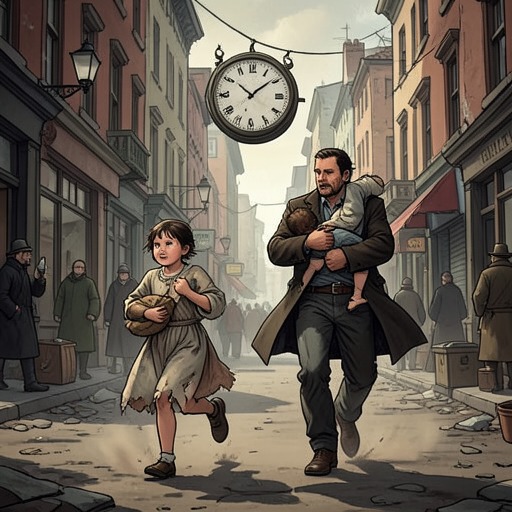
Vittoria’s decisive change becomes clearest when Giuseppina suffers a miscarriage. Giuseppina realizes that the heat between her legs is blood and collapses before she can do more than ask for the midwife. Vittoria runs barefoot over rain-slick flagstones toward San Sebastiano, slips, gets back up, and searches for Mariuccia, the Bagnara midwife. Paolo had told her that women and girls often went to Mariuccia for herbs; in the emergency, Vittoria turns that knowledge into a practical plan.
At the house, Vittoria calls through the window for Mariuccia, explaining that her aunt is bleeding and has fainted. She is frightened that the last remaining piece of her family will be taken from her, but fear does not stop her from seeking help. The contrast with the earthquake is sharp: then she could only obey Ignazio’s instruction to shelter beneath the bed; here, she crosses the wet streets alone to bring an adult to Giuseppina.
Later, when Paolo approaches her while she is dealing with the aftermath of Giuseppina’s illness, Vittoria tells him sharply that someone has to do what needs doing. She says Giuseppina has been ill for days, vomiting and constantly tired, and asks whether Paolo had noticed. He has not. Her directness forces him to recognize both the seriousness of his wife’s condition and the extent to which he has failed to attend to it. Vittoria’s knowledge is practical and attentive, grounded in the symptoms she has observed.
Paolo tries to stutter a response, then shakes his head as guilt overwhelms him. He begins to understand more, including Vittoria’s rebellion the previous night. She watches him silently, gets up, and throws the dirty water out the door. Her eyes are calm and sorrowful rather than accusatory; the passage leaves room for compassion and understanding alongside the rebuke. She has made him confront what he missed, but does not reduce the moment to blame.
Kinship, Bereavement, and Care
Vittoria remains attentive to the condition of the family around her. As a child, she sits with Vincenzo and his cousin Raffaele while Vincenzo shows him his books, and every so often she tries to catch fragments of the older women’s conversation. She is also struck by how time and hard work have changed Mattia’s face. These glimpses present her as observant of both the younger children and the worn adults; she listens from the edge of a conversation even when its burdens are not hers to carry.
When Giuseppina worries that Vincenzo cannot bear to see his dying father, Mattia insists that he is a child frightened by what is happening and urges Giuseppina not to give in. Vittoria’s place in this scene is among the children, but her attention to the adults’ distress anticipates the more active care she will later provide. The family’s grief is not confined to one bedside: it moves across generations, with children trying to understand what adults can scarcely bear to witness.
After Paolo’s death, Ignazio walks away holding Vincenzo’s hand. Vittoria is crying quietly on the doorstep. She pulls her cousin toward her, kisses him, and holds him close, telling him that he too is now without protection, as she is. Vincenzo remains still and speechless. Her words do not restore what the cousins have lost; instead, they identify their shared exposure. Having herself lived with the absence of her parents, Vittoria recognizes what the death means for him and offers the protection she can: presence, touch, and an honest naming of their grief.
Narrative Role and Significance
Vittoria’s arc is marked by reversals in who can act for whom. As a nine-year-old during the earthquake, she is hidden beneath a bed and must wait for Ignazio to return. Later, she becomes the person who runs for help, notices Giuseppina’s illness, and challenges Paolo’s inattention. When Paolo dies, she cannot prevent the loss, but she can reach Vincenzo when he is too stunned to speak. Across these scenes, her growth is registered not through declarations about maturity but through the concrete tasks she takes on and the people she steadies.
The repeated image of protection also gives her story its emotional structure. Vittoria first clings to Ignazio’s shirt, then to Giuseppina; she later fears that Giuseppina may be taken from her, and finally tells Vincenzo that neither of them is protected now. The word changes meaning as she grows: at first protection is something an adult must provide, while at Paolo’s death she can at least provide its human form through an embrace. Her care is limited by the losses she cannot avert, but it makes her more than a witness to the family’s misfortune: she becomes one of the people who hold the surviving family together.